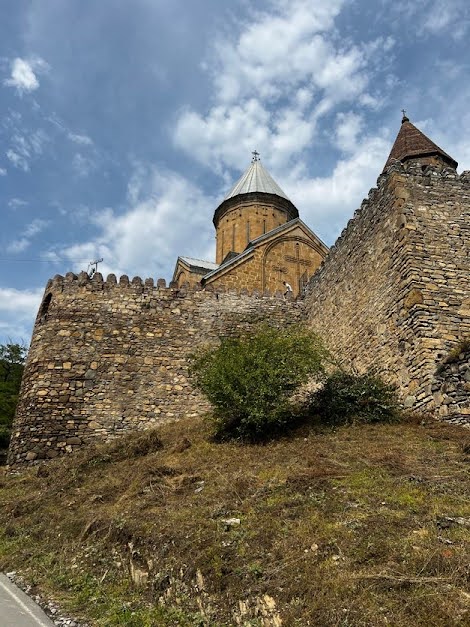
In Tbilisi, the capital of Georgia, we found ourselves atop a mountain with a sweeping view of the Trinity Cathedral. Just a bit higher up, the Cathedral of the Iverian Virgin Mary came into view. As we gazed around, it became evident that this country is deeply rooted in Orthodox Christianity, a striking contrast to other former Soviet bloc countries like Kazakhstan and Uzbekistan, where Islam is the predominant religion. Many Georgians still refer to their country by its native name, Sakartvelo.
We had arrived that very morning, landing around 1 AM. To avoid the hassle of local cabs at such an hour, I had pre-booked a transfer through Welcome Pickups for our group of four. Tbilisi’s airport is relatively small, and if you hold visas from Schengen countries, the USA, Australia, New Zealand, or Canada, you don’t need a separate visa for Georgia. Since our trip was brief—just 3 to 4 days—the best way to see as much as possible was by joining organized tours. We booked these in advance through Viator and GetYourGuide.
For getting around locally, the Bolt taxi app is highly recommended. Make sure to have data on your phone, either through an international roaming package or a local SIM card, which you can buy at the airport. I also exchanged $100 at the airport for local currency. The exchange rate was about 2.65 GEL (Georgian Lari) per USD, which made 1 Lari roughly equivalent to 33 INR.
Opting for one tour per day proved to be an excellent strategy, allowing us to cover the key sights in the shortest time possible with the help of a private vehicle and dedicated guides. In such destinations, language barriers can be a significant challenge. The people were nice and friendly and I was pleasantly surprised when I accidently reached the swimming pool of my hotel which was the venue for a private party and the hosts invited me to join them in this fun pool party. I accepted the offer and had a great time.
The city tour :
We had a leisurely start to our tour, with a pickup from our hotel at 11 AM and a wrap-up by 3 PM. Our guide was excellent, offering insights into Georgian and Tbilisi history as we explored both the old and new parts of the city.
One highlight was the cable car ride from the old town to Narikala Fortress and the Mother of Georgia statue. Although this cable car is 60 years old, it still operates smoothly and provides spectacular views of the town and the Mtkvari River. In contrast, the ‘Turtle Lake Ropeway’ in the new town, which begins at Vake Park near Turtle Lake, looked quite outdated.
Another notable experience was the Funicular ride to Mtatsminda Park, which offers breathtaking views of the city. You have to buy a card and then get it filled with an amount to travel on cable cars and funicular. One card is fine for as many people in your group.
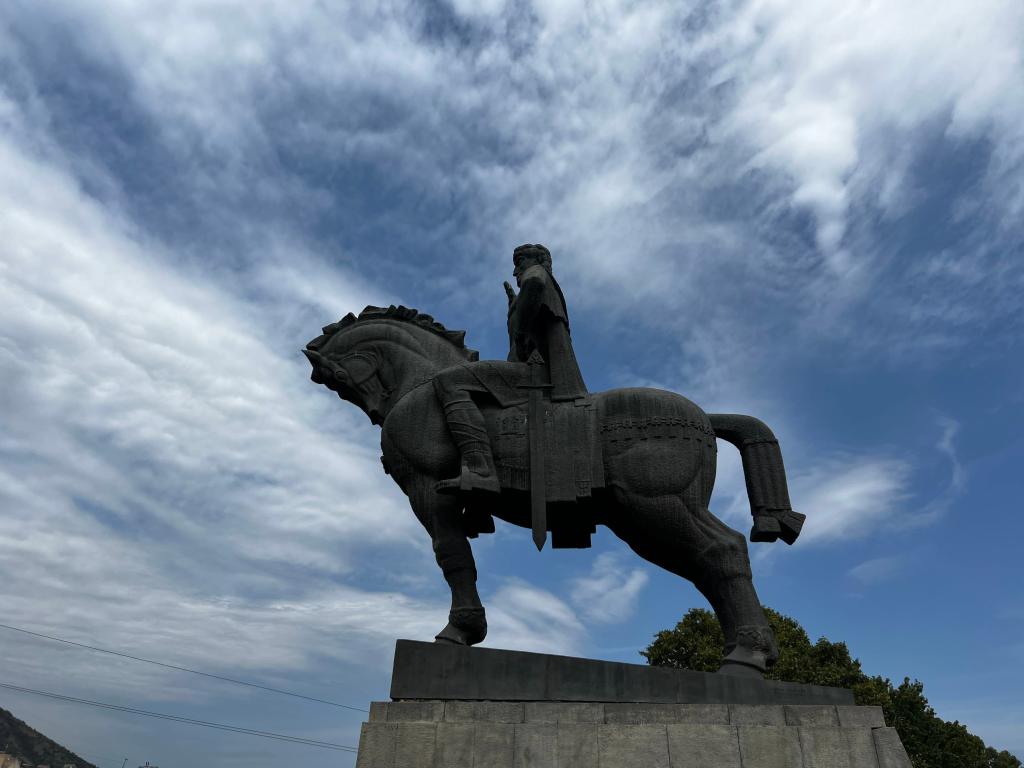
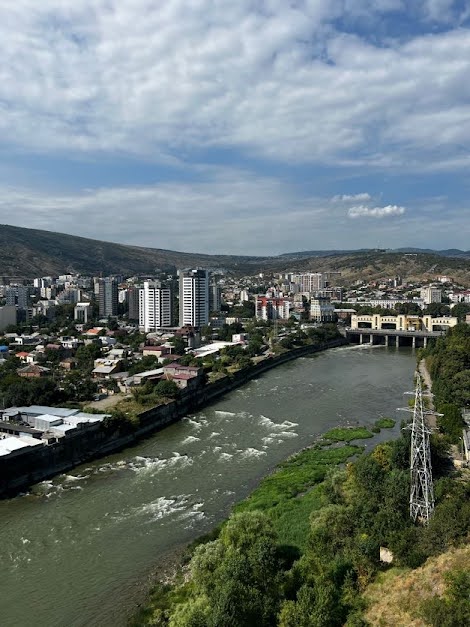


Tbilisi is a picturesque city, surrounded by lush green mountains on all sides. The river adds to its beauty, and some of the Georgian architecture is truly exquisite. The houses and buildings perched on the cliffs give the city a unique character, and there are several interesting monuments, including a piece of the Berlin Wall, located in the city center.
However, the city also has its eyesores, such as the blocks of Soviet-era apartment buildings. It’s important to remember that Georgia was under Soviet rule until 1991 and faced significant financial challenges for the 15 years following its independence.
Rustaveli Avenue offers upscale shopping and malls, but to experience the true vibrancy of Tbilisi, visiting Meidan Bazaar and the Dry Bridge Market is a must.
History : According to legend, King Vakhtang I Gargasali founded Tbilisi, Georgia in the 5th century. The story goes that while hunting in the woods near the Kura River, the king wounded a pheasant that ran into a sulfur spring and healed. The king was so impressed by the hot springs that he decided to build a city around them, naming it Tbilisi, which means “warm” in Georgian.
A tour to the Caucuses :
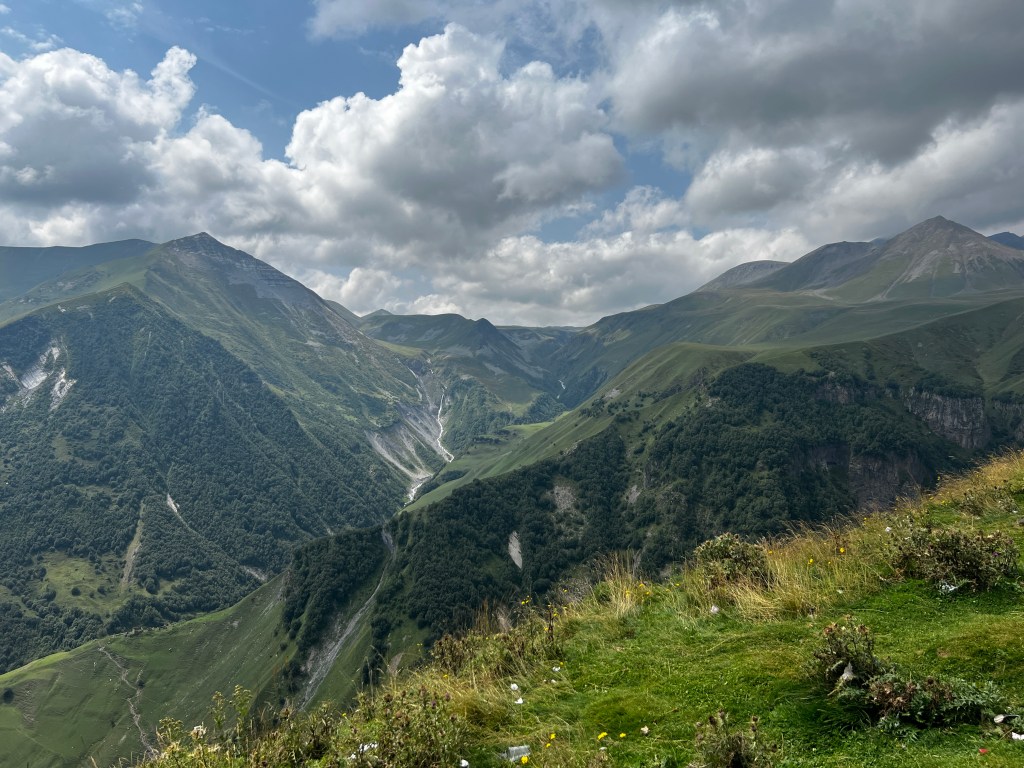
The Caucasus Mountain Range stretches between the Caspian Sea and the Black Sea, often evoking memories of the USSR. Our tour through this majestic range was a lengthy 10-hour journey. The mountains, which dominate much of Georgia, offer a route to Russia, and we traveled close to the Russian border to the 7,000-foot hill station of Kazbegi.
Since it was summertime, there was no snow visible, but we observed ongoing construction by the Chinese on a bridge that aims to shorten the route to Russia by creating an all-weather road through tunnels in the mountains.
Georgia plays a strategic role for Russia, serving both as a consumer of Russian goods and as a transit hub due to its location. This road is crucial for Russia’s military needs and for maintaining control over its former Soviet bloc. The drive was scenic, with stops at the Gudauri ski resort and a spot known as the ‘Russia-Georgia Friendship Point.’
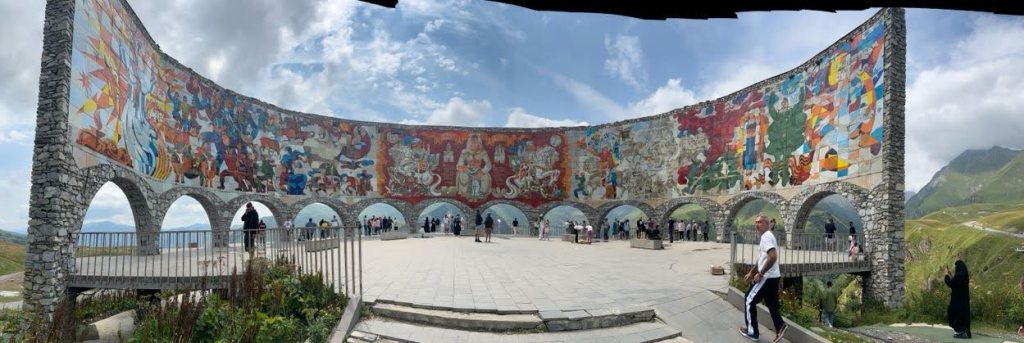
We drove alongside rivers and reservoirs, taking in some breathtaking views. The highlight of the trip was the Gergeti Trinity Church, perched dramatically on a cliff. This monastery has become an iconic symbol of Georgia and truly looks stunning. It’s remarkable to consider how it has withstood centuries of harsh weather.
Staying overnight in Kazbegi instead of just making a day trip would be a great idea. Spending a night in the hills would allow for a more thorough exploration of the area and a chance to fully appreciate its beauty. it would also be a chance to interact with the locals.

A tour to the Ancient capital Mtskheta :
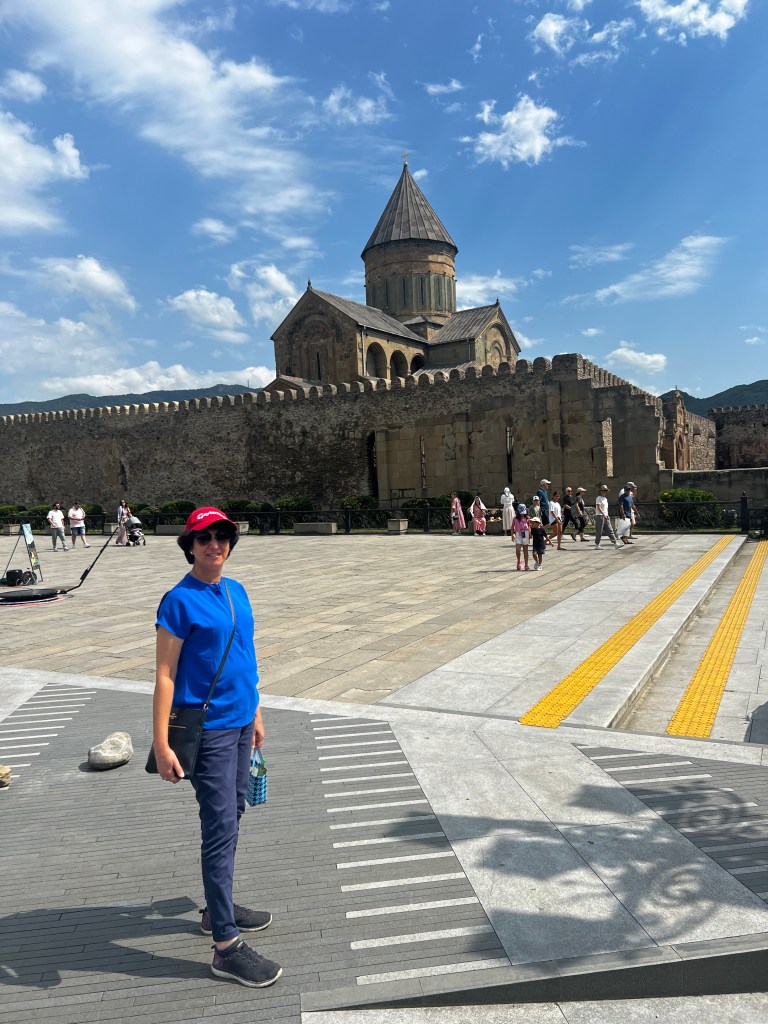

We took another enjoyable tour, lasting around 5 hours, led by our excellent guide, Tamar Imerlishvili. She provided detailed explanations at each stop and spoke fluent English. Born and raised in Tbilisi, Tamar’s insights into the city’s history, including its independence and turbulent periods, were especially informative and well-contextualized.
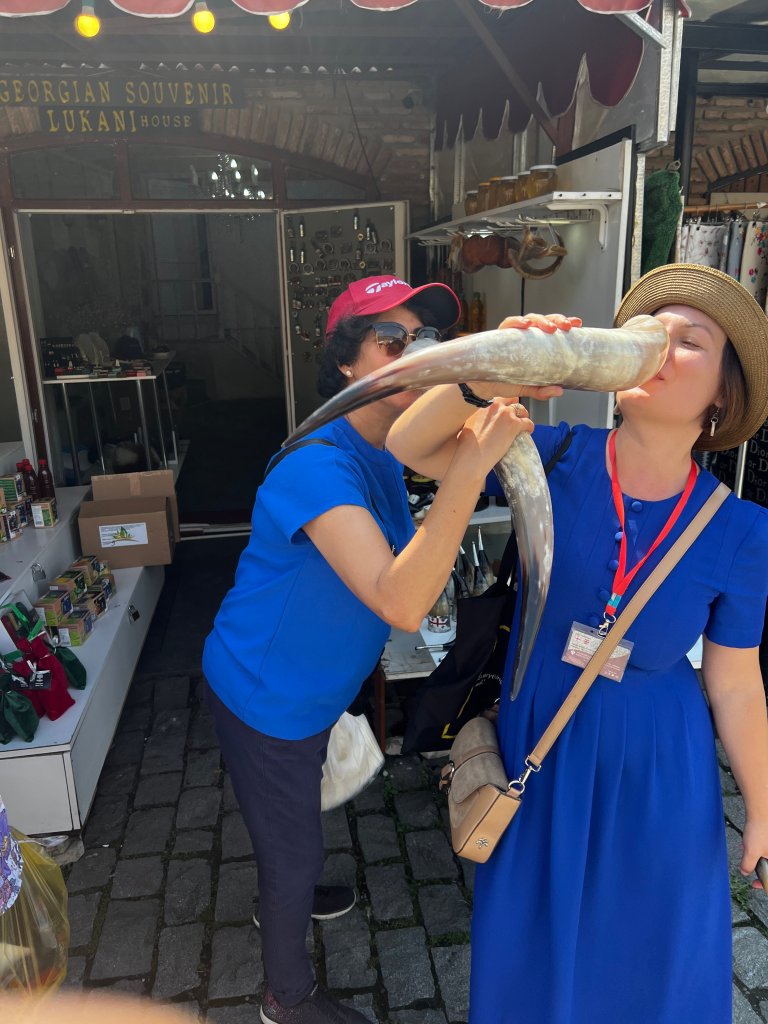
I like the tours that start in the morning and allow for some self-exploration and end by lunch time. Mtskheta, the former capital before Tbilisi took over in the 6th century, was a highlight. The cathedral there, which houses a relic believed to be Jesus’ robe, is a revered site with stunning views from its hilltop location.
Outside the cathedral, there’s an open market that was a lot of fun to explore. I enjoyed wine ice cream, bought souvenirs, and sampled some traditional foods.


The Chronicles

Another lesser-known site is the Georgia Chronicles, which somewhat resembles the UK’s Stonehenge. Situated on a hill, this impressive metal structure towers above its surroundings. It chronicles Georgian history and features depictions of biblical events.
What I found particularly intriguing is why the Soviets, known for their atheism and destruction of numerous religious sites across the USSR, would construct a monument celebrating Christ and Christianity in 1985. I’m curious to learn more about the context behind this decision. I will soon start reading more about Georgia and it’s history.


The Wine Tour :
Turned out to be a longish trip as Kapil and Alka told me. They did this tour as they were staying a day extra in Tbilisi. Georgia has some very good wines though we don’t hear much of it. It is supposed to have 8000 year wine making history. There was a war with Russia in 2008 and with the ban imposed on Georgian wine by Russia – their exports fell by 90%. Now the industry is back in business and the wine business is booming. Also fascinating is the fact that the type of large jars known as kvevri which are still used to make wine in Georgia today have been encountered – with wine residue on them – by archaeologists investigating Neolithic sites in Georgia.
Restaurants of Tbilisi

I have already talked about the city. It has some very nice parks and good hotels. The main street is Rustaveli Avenue which houses malls, good hotels, premium shops, government offices, restaurants and Opera house. You can reach here and explore the city from here as everything is around here. The Stamba restaurant was located near here and we could walk to the Avenue after lunch till Liberty square. One of Cafe Stamba’s standout features is their farm-to-table approach, sourcing fresh herbs from their vertical farm indoors. Dishes such as the “salmon plate” and “khachapuri” (a Georgian cheese-filled bread) are among the favorites. There are several types of Khachapuri and it could be considered as the national dish. Georgia is not a bad place for vegetarians as they do serve vegetarian food in restaurants here. The Udabno Lamb at Stamba was exceptional. For dinner we tried out Beernest restaurant near our hotel and the food was very good.
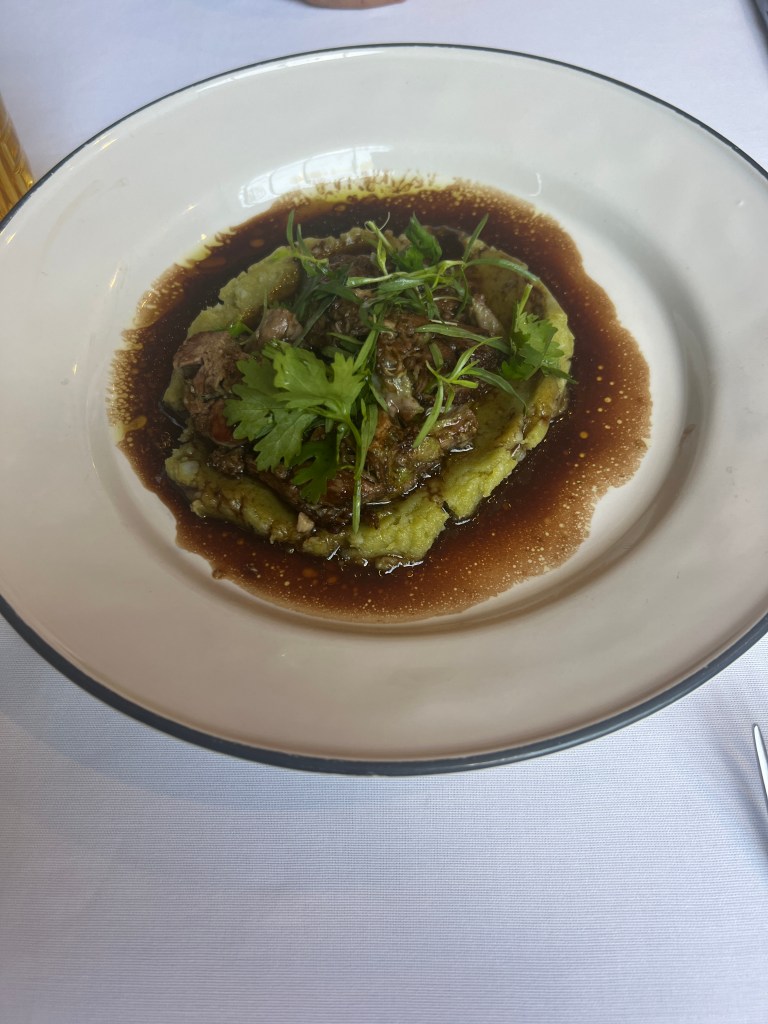
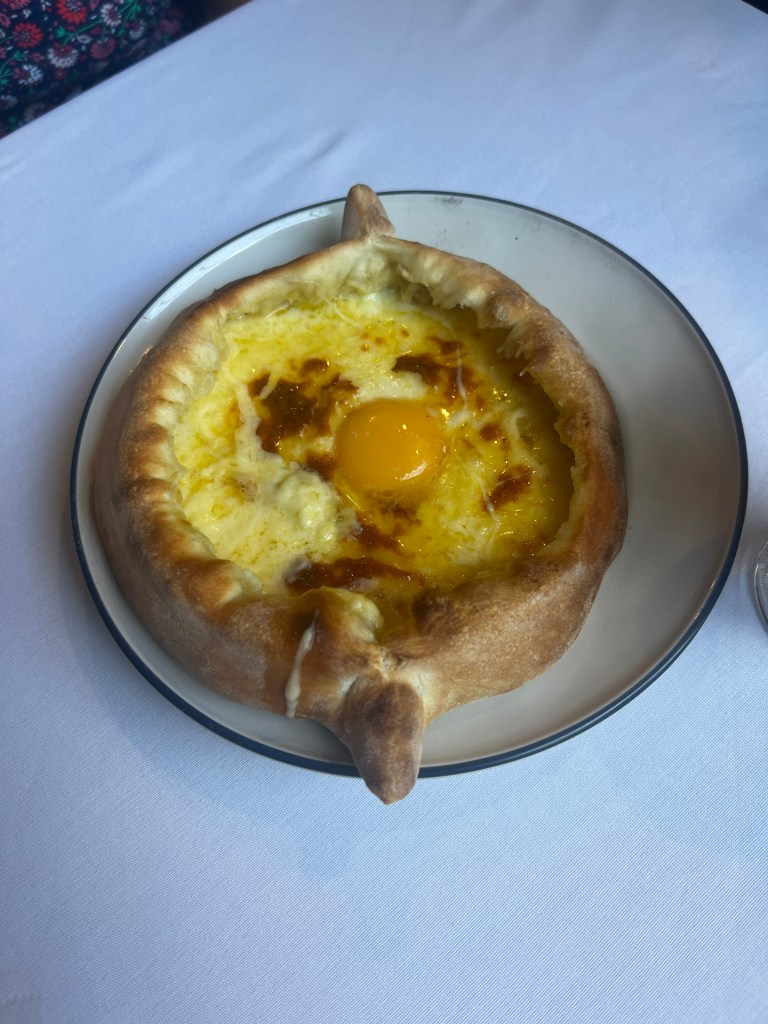
One of the recommended restaurants was Shavi Lomi. For dinner, we initially visited Fabrika, a popular spot with numerous bars and restaurants, frequented by a lively crowd due to its famous hostel. Unfortunately, the cigarette smoke was overwhelming, so we decided to move on to Shavi Lomi after having a drink there.
It was a Saturday night, and Shavi Lomi was packed. Without a reservation, we had to leave without dining. We returned a couple of days later and enjoyed both the vibrant atmosphere and the delicious lamb and trout. The restaurant is located down a dark alley, which made us a bit uneasy when the cab driver dropped us off. The entrance, resembling a wall painting, was confusing at first. However, once inside, we found it to be a fantastic spot.
The best lamb I had was at Natakhatari, a family-run Georgian restaurant on the way to Kazbegi.It was too far from town to go again though I would have loved to try out more things here.
If you’re looking for a variety of options, check out the Bazaar on Orbeliani, which features a food court, farmers’ market, and Carrefour supermarket.
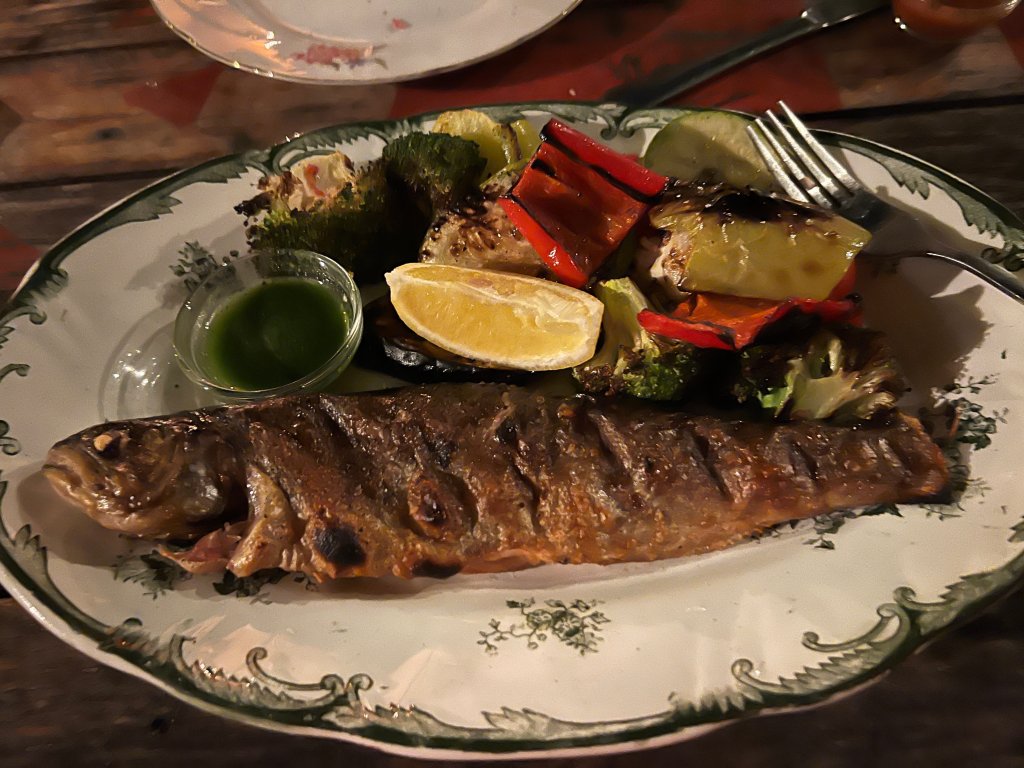


Besides Khachapuri some other famous dishes are Khinkali (Dumplings) and Mtsvadi (Lamb cooked over open flame). Their comfort food is Kharcho (Seasoned meat in sauce enriched with walnuts).
Suggestion
I would suggest that if you do go to this region then make it into a 7-10 day trip. Take a direct flight to Tbilisi and spend 3 days there. Then go by road to the touristy coastal city of Batumi. It takes around 6 hour drive to Batumi. After spending a couple of days here – take a direct short flight to Baku in Azerbaijan. From Baku you have direct flights to India. 3 days should be a good time in Baku.
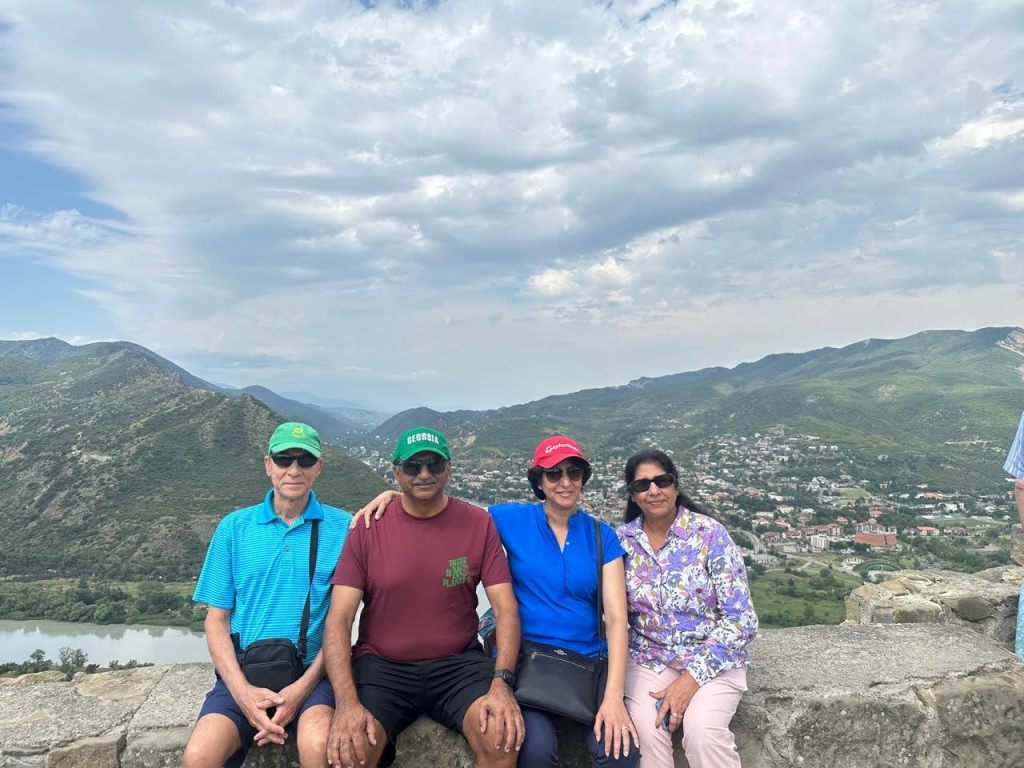
Our Group
 Travel with Rohin
Leave a comment